Names and icons: a self portrait
Part of: johnch.aiA breakdown of my thoughts and process in making the icon for this site and myself
On Names
The concept of nominative determinism is nothing new. Even if this is the first time you've heard the term, encountering a Dr Healey or a weather reporter named Storm Field (actual person) triggers a sort of "of course they would be named that" response. Nominative determinism is, in essence, the hypothesis that a person's name has an effect on their careers or future. Indeed, names are aspirational, given in hopes that one's child will live up to an ancestor, famous figure or set of ideals.
As a Singaporean Chinese, it is common to have both Chinese and Western names given. My given name in Chinese, 明仁 (Ming Ren) was inspired by both tradition and my [and my parents] Christian faith. Entirely unrelated but often brought up by older relatives, the characters in my name are also shared with the former Emperor Akihito of Japan. The name John is of course also biblical in nature, meaning "God is gracious" and referencing the apostle John, "the disciple that Jesus loved".
明 on its own literally represents light, composed of the radicals 日 (ri) and 月 (yue), the sun and moon. This meaning extends metaphorically, representing understanding. This is the appointed character for members of my generation in my clan ancestry, and all my cousins share the character in their names.
仁 (ren) on the other hand represents the Confucian ideal of virtue, which is exceedingly difficult to translate. The word covers a large breadth of concepts in different contexts, being translated as benevolence, empathy, altruism, in both an internal and external manifestation.
Together, my name 明仁, John represents the aspiration from my parents that I understand and embody love and virtue. Returning to the idea of nominative determinism, I do believe that this goal has shaped my growth both consciously and unconsciously. Design, after all, is about placing empathy and humanity at the center of creativity, creating things the world needs.
Icon
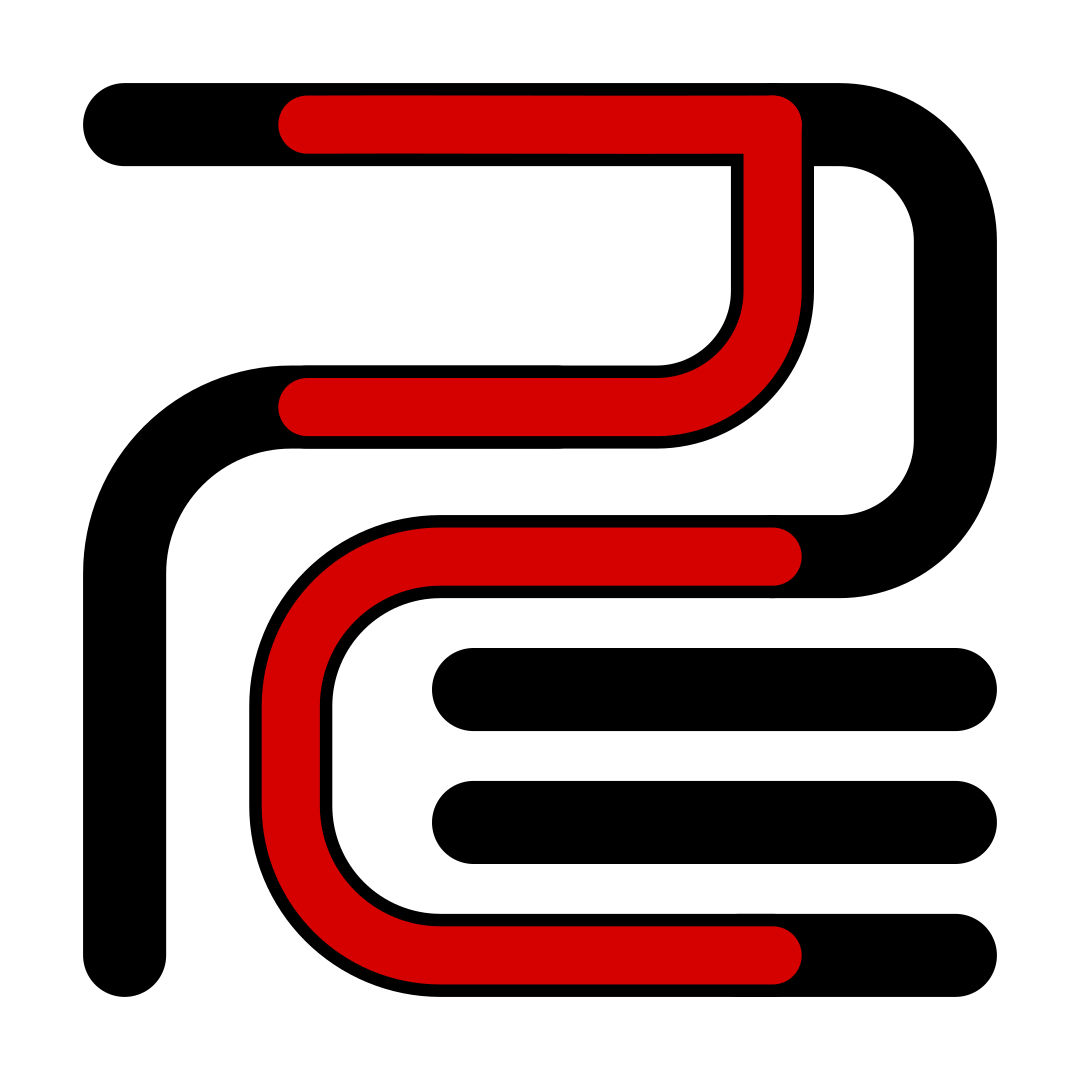
The site icon was designed in Inkscape, rendering the form of the character 仁. The character is rendered in seal script (篆书) which is used for the carved stamps that historically signed documents. In this regard, the icon serves a very similar purpose of being a representation of myself, a signature. The squared geometric form of the script also is reminiscent of circuit board traces, and my university SUTD draws a similar inspiration it its logo. The stamps are traditionally inked in red ink, which led me to use a red highlight in the colour scheme.
The red portion, of course, is my initials, JC. Embedding it directly into the character was a natural development, as I had started the ideation process by sketching variants of JC to find an aesthetically pleasing configuration. In some ways, it also is a statement that while my culture forms my background and has shaped me, my individual identity is still the highlight and focus given that backdrop.
The choice of using 仁 is both because of the geometric similarity that allowed the concept, as well as how central empathy and indeed love for both the process and my fellow man is in my identity as a design engineer. Designing site icon, though initially just a sidequest for "something that looks decent", ended up being its own noteworthy journey in defining identity. I'm not sure if this form of the icon will be updated, but in the meantime it stands as an abstract self portrait of my aspirations and identity.